Friday, July 21, 2017

Review : Jagga Jasoos


Astonishing, Musical and Entertainer !!!!


Jagga Jasoos is just like any other bollywood movie but with twist. The Movie depicts a detective type of storyline, where Jagga (Ranbir Kapoor) along with Shruti ( Katrina Kaif ) are on a trail to find Jagga's Father Bagchi (Saswata Chatterjee). Bagchi being a secret agent is behind a illicit Arms Dealing Racket and is declared dead by the Secret Services. Jagga Tries to find him as he knew with his expert detective skills that he is alive. Saurabh Shukla plays a brilliant role in the movie as officer to kill both Jagga and Bagchi.

The movie revolves around the expert detective skills of Jagga which are well depicted in the Mala's Murder Case and others. Being not able to speak properly and stammering, Jagga tries to converse with music.

Music seems to be entertaining as the lyrics of each dialogue make a perfect sync. Songs like "Galti Se Mistake ", Ullu Ka Pattha" give bollywood like feel and makes it a bit of distraction from the storyline of the film. Anurag Basu as a director has done a splendid job while filming and making it a entertaining and good film as new trend setter in the Industry.


Musicals are not common in the bollywood nor are liked in India, Adapting the style from Hollywood is a great move.

Hollywood has been making this kinda films namely La La Land, High School Musical, Frozen, Whiplash etc. They have performed well and I hoped Jagga Jasoos will too.


India is distinct place and people here are too orthodox, they are not well adapted to change. So it is hard for movies like to this survive.


Overall, The movie is a complete entertainer. With Goofy and Gloomy characters, Melodious music, thrilling cat dog chase, Various Transports and Locations the movie is a must watch for enthusiasts.

P.S : you may find various animals in the movie you may Start Dancing like you did in the La La Land......

I too liked Jagga's Scooter....( Shown in the image)


Friday, June 02, 2017

First Signs Of Human Mutations Found...

The earliest mutations of human life have been observed by researchers at the Wellcome Trust Sanger Institute and their collaborators. Analysing genomes from adult cells, the scientists could look back in time to reveal how each embryo developed.


Published in Nature today (22 March 2017) , the study shows that from the two-cell stage of the human embryo, one of these cells becomes more dominant than the other and leads to a higher proportion of the adult body.

A longstanding question for researchers has been what happens in the very early human development as this has proved impossible to study directly.  Now, researchers have analysed the whole-genome sequences of blood samples (collected from 279 individuals with breast cancer) and discovered 163 mutations that occurred very early in the embryonic development of those people.

Once identified, the researchers used mutations from the first, second and third divisions of the fertilized egg to calculate which proportion of adult cells resulted from each of the first two cells in the embryo. They found that these first two cells contribute differently to the whole body. One cell gives rise to about 70 per cent of the adult body tissues, whereas the other cell has a more minor contribution, leading to about 30 per cent of the tissues. This skewed contribution continues for some cells in the second and third generation too.

Originally pinpointed in normal blood cells from cancer patients, the researchers then looked for these mutations in cancer samples that had been surgically removed from the patients during treatment. Unlike normal tissues composed of multiple somatic cell clones, a cancer develops from one mutant cell. Therefore, each proposed embryonic mutation should either be present in all of the cancer cells in a tumor, or none of them. This proved to be the case, and by using these cancer samples, the researchers were able to validate that the mutations had originated during early development.

“This is the first time that anyone has seen where mutations arise in the very early human development. It is like finding a needle in a haystack.  There are just a handful of these mutations, compared with millions of inherited genetic variations, and finding them allowed us to track what happened during embryo-genesis.”

Dr Young Seok Ju, first author from the Sanger Institute and the Korea Advanced Institute of Science and Technology (KAIST)


“Having identified the mutations, we were able to use statistical analysis to better understand cell dynamics during embryo development. We determined the relative contribution of the first embryonic cells to the adult blood cell pool and found one dominant cell - that led to 70 per cent of the blood cells - and one minor cell. We also sequenced normal lymph and breast cells, and the results suggested that the dominant cell also contributes to these other tissues at a similar level. This opens an unprecedented window into the earliest stages of human development.”

Dr Inigo Martincorena, from the Sanger Institute

During this study, the researchers were also able to measure the rate of mutation in early human development for the first time, up to three generations of cell division. Previous researchers had estimated one mutation per cell division, but this study measured three mutations for each cell doubling, in every daughter cell.

Mutations during the development of the embryo occur by two processes – known as mutational signatures 1 and 5. These mutations are fairly randomly distributed through the genome, and the vast majority of them will not affect the developing embryo.  However, a mutation that occurs in an important gene can lead to disease such as developmental disorders.

“This is a significant step forward in widening the range of biological insights that can be extracted using genome sequences and mutations. Essentially, the mutations are archaeological traces of embryonic development left in our adult tissues, so if we can find and interpret them, we can understand human embryology better. This is just one early insight into human development, with hopefully many more to come in the future.”

Professor Sir Mike Stratton, lead author on the paper and Director of the Sanger Institute


Sunday, May 14, 2017

8 Movies That Increase Your IQ - #5 Will Test How Smart You Are...

We enjoy movies so much that we can underestimate how much value they offer.

If you’re looking to boost your intelligence you can always read a book, surround yourself with educated people, learn a new skill and take care of your health by exercising, getting enough sleep and eating “brain foods.” You can even increase your intelligence by watching TV and movies from time-to-time.

Of course, you have to be discriminating in which shows and movies to view. Educational content like documentaries and current affairs programs are your best options since they may improve your general knowledge and conversational repertoire. Sometimes this type of content can even help you discover a new interest that you may wish to turn into a hobby.

Besides documentaries and programs like the news, you can watch the occasional movie like the following eight films. I’ve found that these movies have not only peaked my interest in new subject matters, they’ve also provided some valuable life and business lessons.

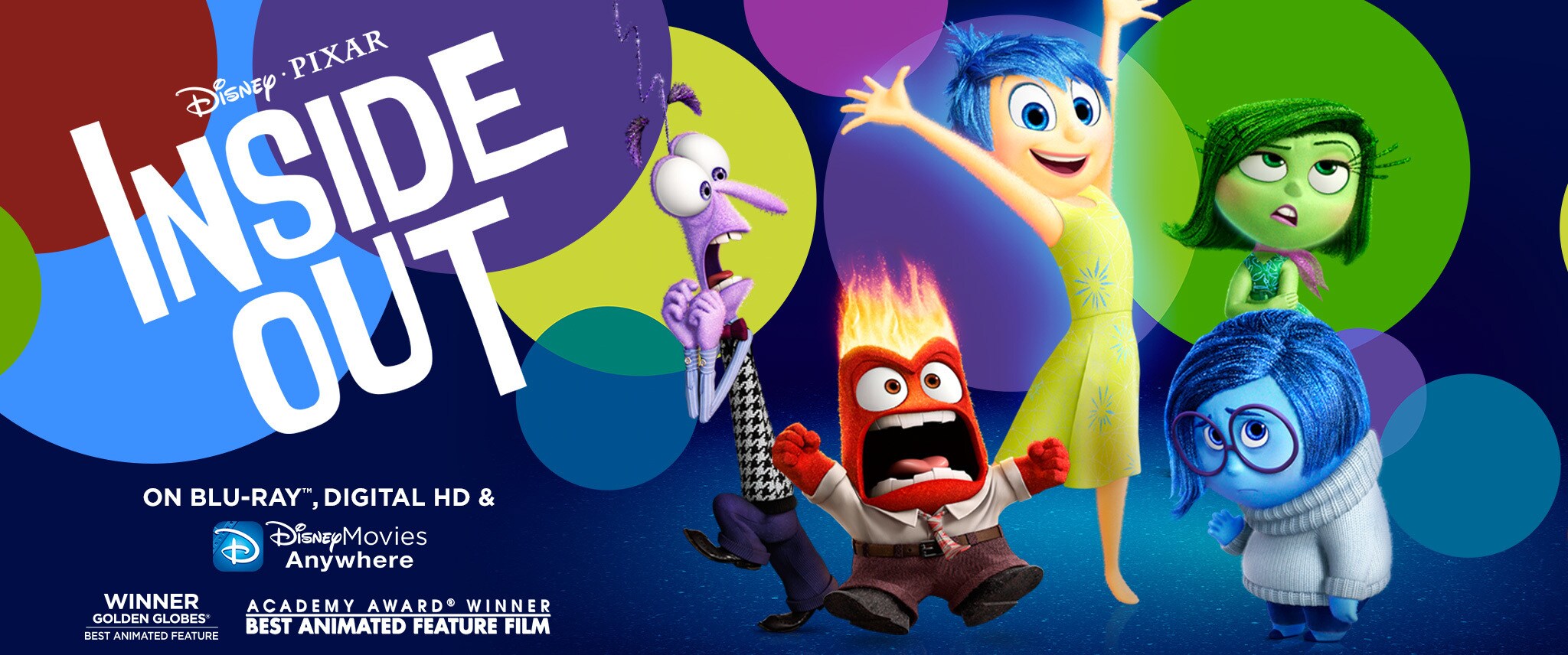
“Inside Out” (2015)


Yes. This is a Pixar film. But, as Charlie Jane Adams, one of the founders of i09 and author of the bestselling All The Birds in the Sky, explains, this story about a young girl named Riley struggling to adjust to moving to a new city “ is an extended metaphor for the changes that happen in your heart and mind as you grow up -- the dueling emotions show the emotional states of a child, being supplanted and rearranged as you learn maturity.” The film also explores “the complexity of the ways that different emotions interact with each other.”

During the course of the film Riley’s emotions, Joy, Fear, Sadness, Disgust, and Anger, discover “how to manage more difficult situations, and to abandon their old assumptions about what kind of emotional state is best.” Additionally, “Inside Out” also explores “the ways that memories are stored in the brain, and how memories can change over time as you revisit them.”

Even though this is a kid’s film, those are all priceless lessons that entrepreneurs should learn during the course of their entrepreneurial journey.


7. “Limitless” (2011)


This thriller starring Bradley Cooper follows Edward Morra, a struggling writer, who is introduced to a nootropic drug called NZT-48. This mysterious pill grants him the ability to fully utilize his brain, which in turn, drastically improves his life.
While there isn’t such a drug, at least not legally or at this level, “Limitless” will prime you to think smarter. Priming, according to Psychology Today, “is a nonconscious form of human memory concerned with the perceptual identification of words and objects. It refers to activating particular representations or associations in memory just before carrying out an action or task.” For instance, if you see the word "yellow," it might be slightly faster for you to recognize the word "banana." This is “because yellow and banana are closely associated in memory.”

6. “The Imitation Game” (2014)


This film tells the story of mathematician Alan Turing, a.k.a. the father of modern computing, as he assisted in a British code-breaking operation that helped shorten the Second World War.

Besides learning the history of Turning and how he laid the groundwork for computers and artificial intelligence by inventing a “universal machine,” “The Imitation Game” also celebrates human ingenuity, encourages you to think big, and inspires you to learn more about Turing and the machine and test that bear his name -- which would come in handy if you’re involved in the tech industry.


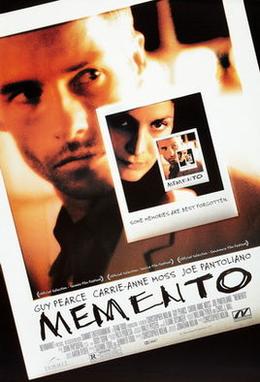
5. "Memento" (2000)


Christopher Nolan’s fascinating detective story follows Leonard (Guy Pierce), a man who is incapable of forming new memories, as he attempts to find his wife’s killer. The film starts in the middle and works it’s way back to the beginning in order to make the viewer go through the same emotions as Leonard.

Juggling between these non-linear narratives can improve your attention and imagine since it forces you to draw your own conclusion. But, more importantly, “Memento” illustrates the importance of memory techniques.


4. “Good Will Hunting” (1997)


This Academy Award-winning film follows a janitor with genius-level intellect working at MIT with a troubled past. Good Will Hunting actually brought in an MIT professor for the complex mathematical equations, and there are also plenty of excellent literary and philosophical discussions between Will and Dr. Sean Maguire (Robin Williams), the most valuable lessons from “Good Will Hunting” are understanding that education can come from anywhere, there’s no such thing as “perfect,” and the importance of emotions and relationships.


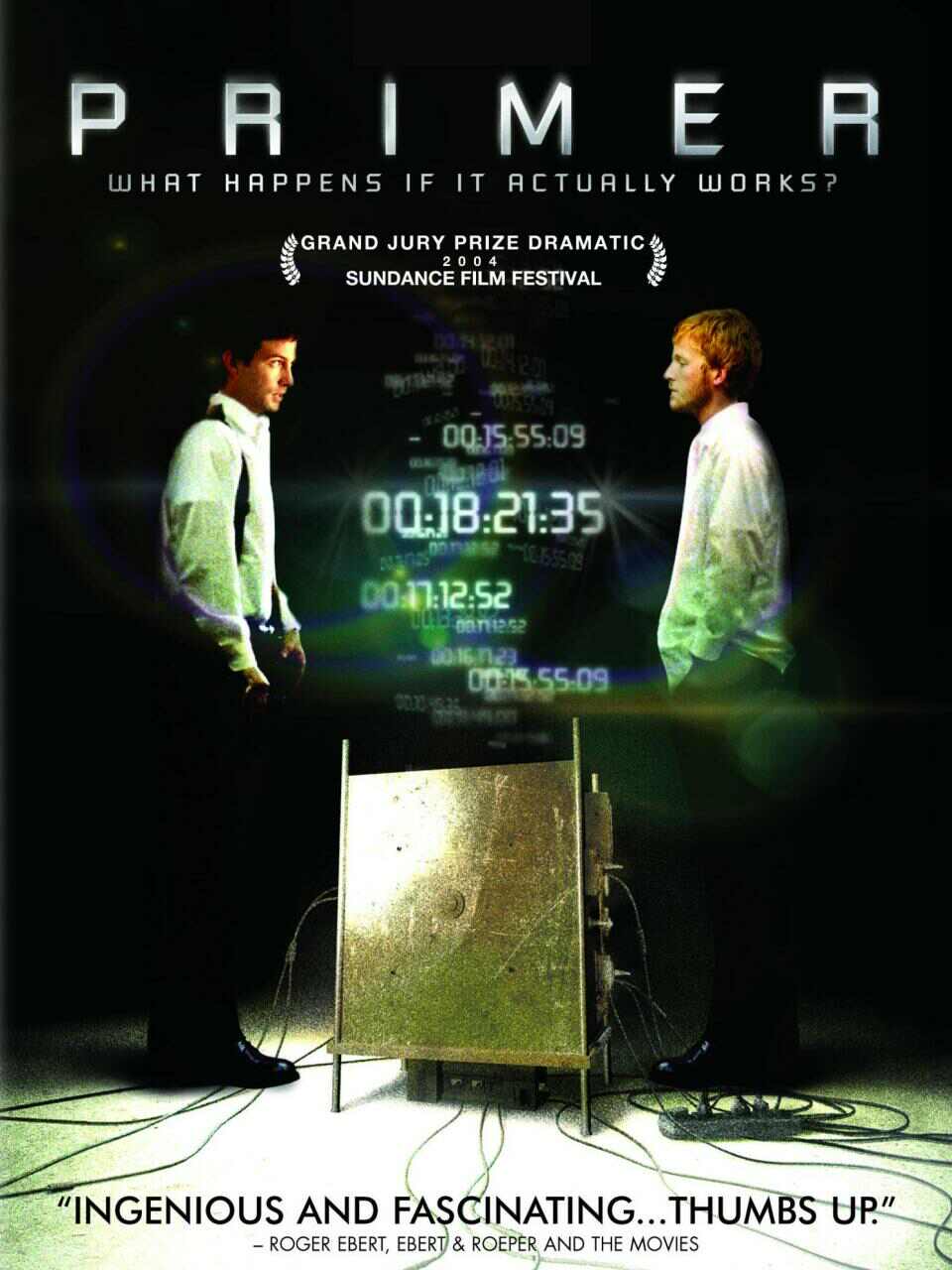
3. “Primer” (2004)


Written, directed, and starring Shane Carruth, who has a college degree in mathematics and previously worked as an engineer, “Primer” is a science fiction drama about two engineers who accidentally discover how to time travel. The film, like Memento, has a non-linear structure, explores the philosophical implications time travel, and discusses complex physics and science theories the Meissner effect and Feynman diagrams.
This film can also be compared to a Rubix cube in that it requires multiple viewings in order to rearrange the plot until you figure this complicated puzzle out.


2. “A Beautiful Mind” (2001)


Inspired by the bestselling biography of Nobel Prize-winning economist and mathematician John Forbes Nash, Jr., this Academy Award winning film focuses on the discovery of the Nash Equilibrium, which as Investopedia explains, “is a concept of game theory where the optimal outcome of a game is one where no player has an incentive to deviate from his chosen strategy after considering an opponent's choice.”

That may sound confusing, but economists have used this theory to “work out how competing companies set their prices, how governments should design auctions to squeeze the most from bidders and how to explain the sometimes self-defeating decisions that groups make.” Furthermore, the “Nash equilibrium helps economists understand how decisions that are good for the individual can be terrible for the group.”


1. “Pi” (1998)


This surrealist psychological thriller film, which was written and directed by Darren Aronofsky, follows an unemployed number theorist named Max who suffers from cluster headaches, paranoia, hallucinations, and social anxiety disorder. The film is notable for covering themes ranging from religion, mysticism, and the relationship of the universe to mathematics. Max becomes obsessed with these themes in order to find the key to the chaos that surrounds us everywhere, which he can use predict anything, such as the stock market.

An introduction to these themes is extremely interesting, but I’ve found that the real takeaway from this movie is the dangers of constantly looking for something that may not be there. No matter how educated and informed you are, you can’t always predict what’s going to come next.


What movies do you believe have give your IQ a boost? And, don’t worry if they’re not critically acclaimed or complex. Even “trashy” movies may make you smarter.